Sunday, April 29, 2018

Do It NOW!!!

Now is the Best Potential Version of You

Do It NOW!!!

Look back 10 or so years. Call into being your ridiculous insecurities, your unnecessary worry, needless doubt, and regrettable caution. Think again to that time. Recall your energy, your enthusiasm, and your vast resources. If you're like me, you will realize just how much time, effort and energy was wasted. How much you could have done and accomplished and how much you could do with those resources now, namely time and energy!

Look at yourself right now. Behold all that you are. Call into being your current insecurities, worry, doubt and caution. Now think about all that you have learned and experienced. Everything you have gone through up to this point. All of the harsh lessons and teachers. This is you NOW! This is the best potential version of yourself, right now! In 10 years, you will be EVEN better. You will look back and realize exactly what you are realizing at this moment. You will see how much of your time, effort and energy is being wasted by worry.

So do it NOW! No matter what your now is, do it! No matter what your "do it" is, do it now! I am not advocating throwing caution to the wind and falling into financial ruin, but I am saying that if you wait, the moment will eventually pass you by and fall to someone else. 

This is life. Right now is your life, your turn. Do It NOW!!!

Thanks for reading,

DocBDC

Becoming a Chiropractic expert

Becoming an expert

(Concepts derived after reading "Badass your brand" by Pia Silva)

Chiropractic school teaches us how to be chiropractors... a specialty. It is almost exactly the same way medical school creates medical doctors (either specialist or general practitioners). The issue is that most people come to us, chiropractors or medical doctors, because they believe we are "experts". Unfortunately, we are specialist not experts. The medical community figured this out a long time ago and created a continuing education program that takes the practitioner from "specialist" to "expert". This is why, with medical doctors especially, there is so much emphasis on their curriculum vitae (C.V.), where they were educated (trained), or where their continuing education has taken them (even general practitioners are specialist for the "general" population and hone their skills through education and experience).

Chiropractors, I will compare them to orthopedists, graduate with a certain level of education and experience. They have endured the rigors of the education process, multiple national board examinations (possible state board examinations), hands-on clinicals (similar to medical internship or residency, as well as the chiropractic equivalent of "rounds"), and have begun their practice. Their education has made them a specialist, much like an orthopedist is a specialist in orthopedics (branch of medicine dealing with the correction of deformities of bones or muscles), a chiropractor is a specialist of the spine, primarily its function as a neuroskeletal system*. Many of us chiropractors also take our education further by learning the interplay of all the articulations of the body, basically we learn to identify abnormal joint motion in any joint and how to correct it if applicable.

*Neuroskeleton is an old term used to describe the interaction between the spine and the nervous system. It is not a term used anymore, except by few, but the more I learn and read about how chiropractic is different from its medical counterparts the more this term is apt. It embodies the essence of how chiropractic works and why everyone should get checked by a chiropractor routinely.

- Chiropractors, however, lack the continuing education system to make them "experts", much like a "general practitioner" lacks the education to be a specialist. This is one very important reason why there has been a sharp decrease in "chiropractic expert witness" over the last 20 years in the courts. This is why the chiropractic profession enjoys only 8% of the United States population utilizing it's unique style of care. No one has taken up a continuing education program that takes Doctors of Chiropractic from specialists to experts... Well, that is not entirely true. There are organizations that offer diplomates and certifications in various specialties, but these practitioners tend to see less and less patients as they are attractive to large institutions, such as hospitals and schools. Also, the programs are mad-expensive and in order to take such a program one must take out a loan... Or the time-expense; these programs are setup like school, so you must leave your practice in order to participate in most of them. None of this appeals to those of us who cannot afford it or have families to consider.

The program I am enrolled in has positioned itself by partnering with a medical school to give up-to-date credentialing and created chiropractic courses for chiropractors is the Academy of Chiropractic. Dr.'s Mark Studin and Bill Owens have gone to great lengths to create a program that is qualified and robust in order to give the chiropractor the very best understanding of the human spine. Over the next 3 years I am undergoing courses so as to give myself an edge. With the education, and aforementioned credentialing, I will be able to communicate with other professionals such as neurosurgeons, orthopedic surgeons, physical therapists, hospitals, etc. The credentialing speaks to the medical professional because of it's backing by the S.U.N.Y Buffalo Medical School and Texas College of Chiropractic, now Cleveland-Kansas City University. The program also speaks well to my strong sense of being a chiropractor first and unwilling to "sell-out" my professional philosophy. They have done what very few, if any have done before them and created a program to bridge chiropractic and the medical professions without requiring chiropractic to disown all that makes it unique, effective and different from the medical profession.
Just look at that previous paragraph. It looks like a sales ad for the Academy of Chiropractic. I guess you could say that I'm very excited to be taking classes from them. I am excited at the possibilities that could potentially open to me by diving into such a singular program. What's best? I get to go from "specialist" (chiropractor) to "expert" (Primary Spine Care). I am given the opportunity to move closer to mastery.
  

Sunday, April 15, 2018

Gout! My Journey

Gout

I have gout. Sometimes gout has me. Even taking medication does not stop gout attacks and I have flares periodically. So what is gout? Why am I spending a whole post on gout?

What is it?
According to Google, gout is...
1. a disease in which defective metabolism of uric acid causes arthritis, especially in the smaller bones of the feet, deposition of chalkstones, and episodes of acute pain.
2. <literary> a drop or spot, especially of blood, smoke, or flame.
"gouts of flame and phlegm"


As per the Mayo Clinic...
"Gout is a common and complex form of arthritis that can affect anyone. It is characterized by sudden, severe attacks of pain, swelling, redness and tenderness in the joints, often the joint at the base of the big toe.
A gout attack can occur suddenly, often with the sensation that your big toe is on fire. The affected joint is hot, swollen and so tender that even the weight of the sheet seems intolerable. Symptoms may come and go (referred to as gout flares)."
Signs & Symptoms (Mayo Clinic) ...
... almost always occur suddenly, and often at night. They include:
  • Intense joint pain. 
    • Gout usually affects the large joint of your big toe, but it can occur in any joint. 
      • Other commonly affected joints include the ankles, knees, elbows, wrists and fingers. (For me, I also get inflammation and tenderness in my Sacroiliac joints, too.)
    • The pain is likely to be most severe within the first four to 12 hours after it begins, but can linger for extended periods of time.
  • Lingering discomfort. 
    • After the most severe pain subsides, some joint discomfort may last from a few days to a few weeks. 
    • Later attacks are likely to last longer and affect more joints.
  • Inflammation and redness. 
    • The affected joint or joints become swollen, tender, warm and red.
  • Limited range of motion. 
    • As gout progresses, you may not be able to move your joints normally due to destructive changes to the joints
So why a whole post on gout? 
Well, for one thing, I found information connecting gout to brain fog but I could not find any information on the major health centers websites regarding the body aches. I suffer from gout, and have suffered since longer than I realized. I was finally diagnosed when I was in my early 30's, I am now 40. The diagnosis came from years of unknown foot and ankle pain that progressively got worse as I got older; it started in my early 20's. I would usually wake up and have foot and ankle pain that I could not explain nor account for, but it was excruciating. Some attacks would have me asking, "did I sprain my ankle in my sleep?" "Did I fracture my ankle yesterday and not notice?" "Did I drink last night?" I could never answer any of those questions, and the pain would usually subside within a day or so. As I approached my 30's, I began to notice more symptoms evolving around the gout flares. I would become inexplicably irritable days before the foot pain. I would wake up in a brain fog as well, and it would linger from before the gout flare until days after the flare subsided. My sleep would become poor as I would wake often. Finally, I would develop body aches even without the foot and ankle pain. These body aches would include achy joints, decreases strength, fluid retention, muscle soreness and intense muscle spasms. I am forced to become sedentary during these bouts as exercise made everything worse. 
I have not found any information from reputable sources on the body aches being connected with gout but I found that depression disorders are very much correlated. So while the body aches seem unexplained, the brain fog and irritability most certainly are:  
  • In a nationwide cohort study, involving 34,050 participants, there is some kind of correlation between gout and depression (depressive disorders). Basically, anyone who has reoccurring or chronic pain is more likely to suffer from depression, especially as they get older. https://www.ncbi.nlm.nih.gov/pmc/articles/PMC5291635/
I will tell you my hypothesis on the body aches, in addition to the depression. My best educated guess is the body ache's (achy joints, fluid retention, decreased strength, muscle soreness, and intense muscle spasms) are from some sort of toxicity. I'm not a chemist, but based on how I feel, I would say that my body feels "toxic." Seeing as how gout is a problem with uric acid metabolism (breakdown and excretion), it makes sense that the elevated uric acid in the blood stream and tissues creates a toxicity situation. Either the uric acid itself is creating the toxicity, or the elevated uric acid in the body is also interfering with other metabolic processes creating a cascade of multiple minor toxic events. All together, the feeling is a body that does not work properly. 
This hypothesis is only an educated guess by a guy who is not a chemist, physiologist, nor nephrologist. I am only guessing as to what is happening in my body.

"He who is proud of his knowledge, has gout in the wrong end."
Thomas Adams
"That city is in a bad case whose physician hath the gout." ~Hebrew proverb
"Screw up the vise as tightly as possible — you have rheumatism; give it another turn, and that is gout."~Popular jest, c.1823
"Having a gout flareup in your toe is like having your toe catch on fire, and then putting out the fire by slamming it with a hammer." ~Anonymous urgent care clinic patient, 2011
"If you drink wine, you have the gout; if you don't drink wine, the gout will have you." ~German proverb
"Love, fire, a cough, the itch, and gout are not to be concealed." ~German proverb
"Gout is like is like waking up with a hangover, except instead of a headache there is blinding foot pain that will soon awaken other rheumatism." ~DocBDC

To any and all of those reading afflicted with gout, you are not alone.
Thank you for reading, as always,

DocBDC

<At the time of this post I am in the midst of a 2 week attack.>
<Week 1 was irritability and brain fog (depression)>
<Week 2 is the above plus crippling foot pain>
<My insurance company has denied coverage for my gout medicine so I'm relying on samples from my nephrologist. When those run out...>

Sunday, March 25, 2018

Overqualified, Mastery, and Expertise

Which are you?     Which do you want to be?     What are you doing to get there?

Definitions:

Overqualified:
  1. having qualifications that exceed the requirements of a particular job. "i am overqualified for the clinical practice for which I currently work."

Mastery: "Mastery is the urge to get better and better at something that matters." - Daniel Pink
  1. comprehensive knowledge or skill in a subject or accomplishment. "she played with some mastery"
  2. the action or process of mastering a subject or accomplishment. "a child's mastery of language"

Expertise:
  1. expert skill or knowledge in a particular field.

Expert:
  1. a person who has a comprehensive and authoritative knowledge of or skill in a particular area. "experts in child development"
  2. having or involving authoritative knowledge. "he had received expert academic advice"

Image result for the most dangerous are the uneducated

Weighted Hip Thrusts, Let's Dive In

Image result for hip thrust
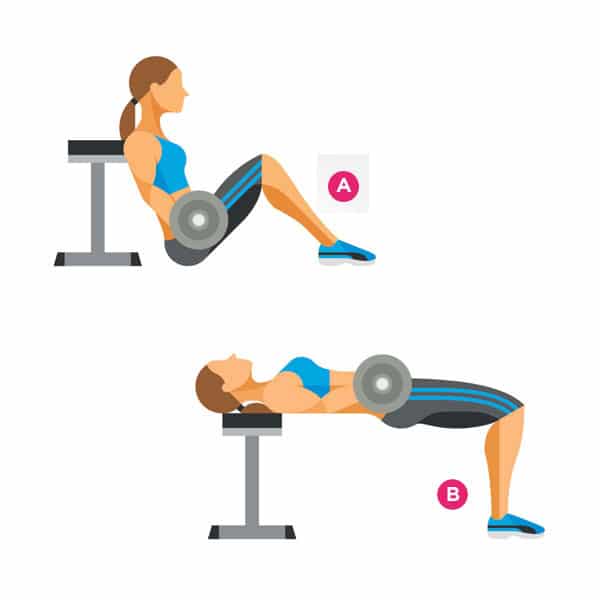
This is the "Weighted Hip Thrust"
The Weighted Hip Thrust is to be avoided, as a rule of thumb. Of course, there are exceptions...

  • My biggest caveat is if, a BIG IF, you are under the supervision of a highly-qualified personal trainer or highly educated sport performance coach. 
    • Their expertise should be extensive and... Elite!
  • OR, you're extremely well versed in this move and you have exceptional body awareness.
  • Of course, body weight hip thrusts, or bridges, are EXCELLENT exercises and EVERYONE should do them.
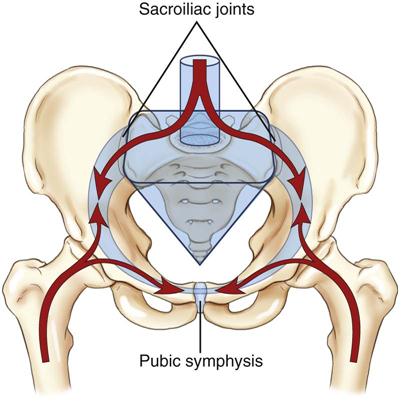
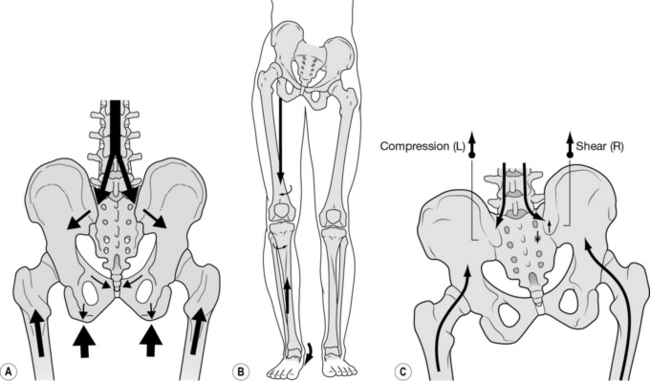
Forces travel through the pelvis in very particular ways. In anatomy & physiology, structure ALWAYS governs function. Below is a sampling of pics that demonstrate how forces travel through the pelvis.

Image result for forces through the pelvisImage result for forces pelvisImage result for forces through the pelvis

Use your imagination and compare the force-pics to the pic at the top of this post. Do you see what I see? There is NO similarity to how forces travel through the pelvis, for which the pelvis is designed (structure governs function), and placing a weight on the anterior (front) of the pelvis and thrusting forward. From my perspective, this exercise is "circus, not purpose" driven. It looks "shiny", different and "hip" (pun intended), but it works the body against its natural design.

Unfortunately, this plagues the fitness world. Everyday in every gym or on television, you will see "circus, not purpose" exercises. Whether from boredom, lack of knowledge, or g-d knows what else, people see an exercise that "looks cool" and will attempt it. The worst thing is if they like it or if it works, because then they will continue to do the exercise. All the while, reinforcing abhorrent movement patterns, time-and-time again.

I am a firm believer in exercises that are applicable in the "real-world". This applies to everyone and is different for everyone. Bodybuilders are sculpting there body into works of art, so they are an outlier. The surfer has different needs from the baseball player. The hockey player differs in how they use their body from the sprinter. The desk-jockey has different needs then the E.R. nurse. The workouts for each of these, and all of those I've not mentioned, differs due to the demands of life. Your workouts should be designed for the needs of your body. Canned workouts, strictly adhering to books/videos, or adopting exercises because it's "new-shiny-cool" will lead you to a potentially injurious place.

Weighted hip thrusts are but one of many workouts for which I disagree. There are trainers, at least 2 that I've come across, that have built immense financial wealth by promoting this exercise, among others. They are wrong. They have not done the research, nor put in the critical thought toward the weighted hip thrust. They're merely exploited its growing popularity to amass "followers" on social media and money.

Workout according to your needs. If you need help, hire a personal trainer or join a sport performance center's adult classes... Or contact Coach Brian Barry at Linked Athletics Sport Performance Center (www.linkedathletics.com). Email him and he can help guide you or even put together remote workouts. Your individual needs must be met by your exercise program, as well as, the exercises within your workouts.

Thank you for reading my opinion piece,

DocBDC

Wednesday, March 14, 2018

The Core and the Back

I've been sitting on this since 2012!

This is the rough-cut, second draft, project I started before 2012, but FINALLY compiled. This is, to the best of my knowledge and creativity, the CORE of the BODY. I cannot abide the idea that the core is comprised of 4, 7, or even 12 muscles. I require, for my own edification, that a more complete list be drawn-up so even more comprehensive exercises may be developed through the application of anatomical science.
Since I could not find one, here is my work-in-progress.


The Core

  • Diaphram
  • Multifidi
  • Rotatores
  • Semispinalis (Thoracic-Head)
  • Erector Spinae
    • Iliocostalis
    • Longissimus
    • Spinalis
  • Quadratus Lumborum
  • Abdominals
    • Rectus Abdominus
    • Int. Oblique
    • Ext. Oblique
    • Transverse Abdominus
  • Glutes
    • Glut Max
    • Glut Min
    • Glut Med
  • Tensor Fascia Lata / Iliotibial Band
  • Piriformis
  • Int./Ext. Obterator
  • Sup./Inf. Gemella
  • Quadratus Femoris
  • Pelvic Floor Musculature
  • Hamstrings
    • Semitentinosus
    • Semimembranosus
    • Biceps femoris
  • Quads
    • Vastus Lateralis
    • Vastus Medialis
    • Rectus Femoris
  • Sartorious
  • Psoas
    • Iliacus
    • Psoas major 
    • Psoas minor
  • Adductor Magnus
  • Adductor Longus
  • Adductor Brevis
  • Gracilis


The Back

  • Traps
  • Lats
  • Levator Scapulae
  • Rhomboid Major
  • Rhomboid Minor
  • Serratus Posterior Superior
  • Serratus Posterior Inferior
  • Splenius Capitis
  • Splenius Cervicis
  • Iliocostalis
  • Longissimus
  • Spinalis
  • Multifidus
  • Rotatore

*There are approximately 77 back muscles in 3 layers, the first, second and deep layer.

Not Part of My Tribe!

Recently my family is undergoing a rather stressful time. My youngest daughter is being evaluated for autism. For those who have met her, I get many questions and disbelief, "but she makes eye contact", "but see smiles and engages", "but she seems so normal". Yes she does, and is, but she has traits that are up to, but not beyond, an 18 month old (she's almost 3). She advances in skills, then regresses almost equally when she is under stress. She is almost 3 years old and cannot speak, she mostly babbles, nor does she engage with other children. She screams, growls and is beginning to flap her hands when frustrated. We put her in daycare for almost 6 weeks, after that time my daughter spoke to her mother, the teacher remarked, "I've never heard her speak, I thought she might be mute." After some gentle interrogation, my wife discovered that our daughter never sat with the other children, but played alone with very specific dolls. Other children would come up to her and engage, my daughter would "parallel play" with them, but when they would leave, she would stay. The teacher also remarked on how well behaved my daughter was, never complained, always did as instructed, always so compliant... this is not the report I want about my 2 year old. They are suppose to be defiant, it's part of their developmental process. Missing it may indicate their brains are not developing as they should. A Google quick search yielded this definition of autism:
  • a mental condition, present from early childhood, characterized by difficulty in communicating and forming relationships with other people and in using language and abstract concepts. - A quick Google Search (*a more complete definition, including DSM V, can be found below*)
I explained to a person (names, gender and situations are changed to maintain privacy, but you know who you are...) that I may be a high function autistic who has devised and implemented unconscious "strategies" to "normalize" my behaviors and reactions (basically, I appear and seem "normal," but it's more complicated than that). However, due to the "strategies" implemented it is considered currently impossible to test for autism in adults. Further, my mother, who's worked in the field of psychology as an L.P.C. (boots on the ground type) for decades and has taken leadership roles at the state and local levels, indicated that she agrees. Looking back, she sees that, had I been evaluated, I probably would have been diagnosed as a "very high functioning autistic., Asperger-ish". The response I got from said-person was, "YOU ARE NOT AUTISTIC," "your mother is just wrong, just wrong." Needless to say, I became... angry enough to feel my blood pressure rise and to feel the tingle of adrenaline and blood flow just under my skin. I kept my cool, even their friend in the room did not notice the momentary change in my demeanor. I was verbally uppercut to the gut. Throughout the day, I was able to process my feelings on what was said and why I reacted with such verve. Here is what I came up with so far:

  1. I am a mama's-boy, nobody criticizes my mama without a me getting angry
  2. This person does not know my mother, her achievements, or her education & experience, nor was this person there when my mom and I had the conversation
  3. This person did not know me as a child. The only time when autism can be diagnosed.
  4. This person has an autistic son. I then assume the son's "function" may not be high. My guess is that I did not meet their criteria for their experience of autism. The person's son may be one who is difficult on good days, impossible on bad days, and a blessing on the best of days.
  5. The person could have used the "I" approach, "I don't agree," " I don't see it", etc. Instead, they decided to attack, "You are not...", "Your mother is just wrong...". The person could have been more diplomatic with such a potentially sensitive topic, instead they went with being a JERK.
    1. I have my own theories as to this persons mental diagnosis, but I will leave it up to your imagination
Ultimately, I come to the point, and the title of this longer-than-expected post...
Anyone else getting the sense that I am using my blog just to bitch about life. Sorry about that. It's been a difficult few months...
This person fell smack-dab into a trap that I see happen everywhere, in every walk-of-life, in every corner big or small. The notion that "you do not fit into my tribe." I mention that I might be super high-functioning autistic, "mildly" autistic would be apt, and this person reflexively attacks. I'm not saying they knowingly attacked, but that is what happens when you use the "You" method of counter-argument. They demonstrated, quite literally, the reflexive nature of inclusion and exclusion (Tribes). "You do not resemble what I know this thing to be, therefore you ARE NOT this thing," i.e. In their mind they could not see the resemblance between their son and I, therefore I must not potentially have the same diagnosis as their son. If there is one thing I would like them to know it is that they are an expert in the diagnosis of their son, but ONLY in their son. They have no business, or say, in the potential, or actual, diagnosis of anyone else... Even if, especially if, the diagnosis is the same. They have no right to get "judge-ie" just because their experience is more difficult.

Hence the tribe mentality. On the one hand, tribes are good. They help us to find those in which we share any or all things in common. They create meaningful and long-lasting bonds, potentially. They increase survival quotients, in our first-world society, tribes help increase our "thrivability quotient". On the other hand, tribes exclude those that are deemed as different. Tribe mentality is great when the population of an area is low and survival is a problem, but when you live in a country of wealth, then tribes begin to get picky. Sometimes this keeps the heard culled, but others it just hurts people.

Thank you for reading,

DocBDC

--------------------
Here is the fuller definition of autism. Upon scrutiny, I did fit, and still do to a lesser extend, every single one of the DSM V criteria. Not in the disabled way, like I have to imagine the son, but in the cognitive difference akin to certain types of savantism. I've highlighted what trait I possess...

*Autism defined: 
  • a mental condition, present from early childhood, characterized by difficulty in communicating and forming relationships with other people and in using language and abstract concepts. - Google Search
  • a range of conditions characterized by challenges with social skills, repetitive behaviors, speech and nonverbal communication, as well as by unique strengths and differences. We now know that there is not one autism but many types, caused by different combinations of genetic and environmental influences. -Autism Speaks
  • DSM V
    • Persistent deficits in social communication and social interaction across multiple contexts, as manifested by the following, currently or by history (examples are illustrative, not exhaustive, see text)
    • Restricted, repetitive patterns of behavior, interests, or activities, as manifested by at least two of the following, currently or by history (examples are illustrative, not exhaustive; see text)
    • Symptoms must be present in the early developmental period (but may not become fully manifest until social demands exceed limited capacities, or may be masked by learned strategies in later life)
    • Symptoms cause clinically significant impairment in social, occupational, or other important areas of current functioning
    •  These disturbances are not better explained by intellectual disability (intellectual developmental disorder) or global developmental delay. Intellectual disability and autism spectrum disorder frequently co-occur; to make co-morbid diagnoses of autism spectrum disorder and intellectual disability, social communication should be below that expected for general developmental level
      • With or without accompanying intellectual impairment
        With or without accompanying language impairment
        Associated with a known medical or genetic condition or environmental factor
        (Coding note: Use additional code to identify the associated medical or genetic condition.)
        Associated with another neurodevelopmental, mental, or behavioral disorder
        (Coding note: Use additional code[s] to identify the associated neurodevelopmental, mental, or behavioral disorder[s].)
        With catatonia (refer to the criteria for catatonia associated with another mental disorder, pp. 119-120, for definition) (Coding note: Use additional code 293.89 [F06.1] catatonia associated with autism spectrum disorder to indicate the presence of the comorbid catatonia.)
Social (pragmatic) Communication Disorder
  • Difficulty understanding and following such social-communication “rules.” ... 
    • Clearly, many individuals with autism share these difficulties. 
      • To receive a diagnosis of ASD under DSM-5, one must also have the repetitive behaviors and/or restricted interests typical of autism
Like SCD, autism involves difficulty with social communication skills. But autism has the additional defining characteristic of restricted and/or repetitive behaviors. So an evaluation must rule out autism before reaching a diagnosis of SCD